
What Are Breathing Problems?
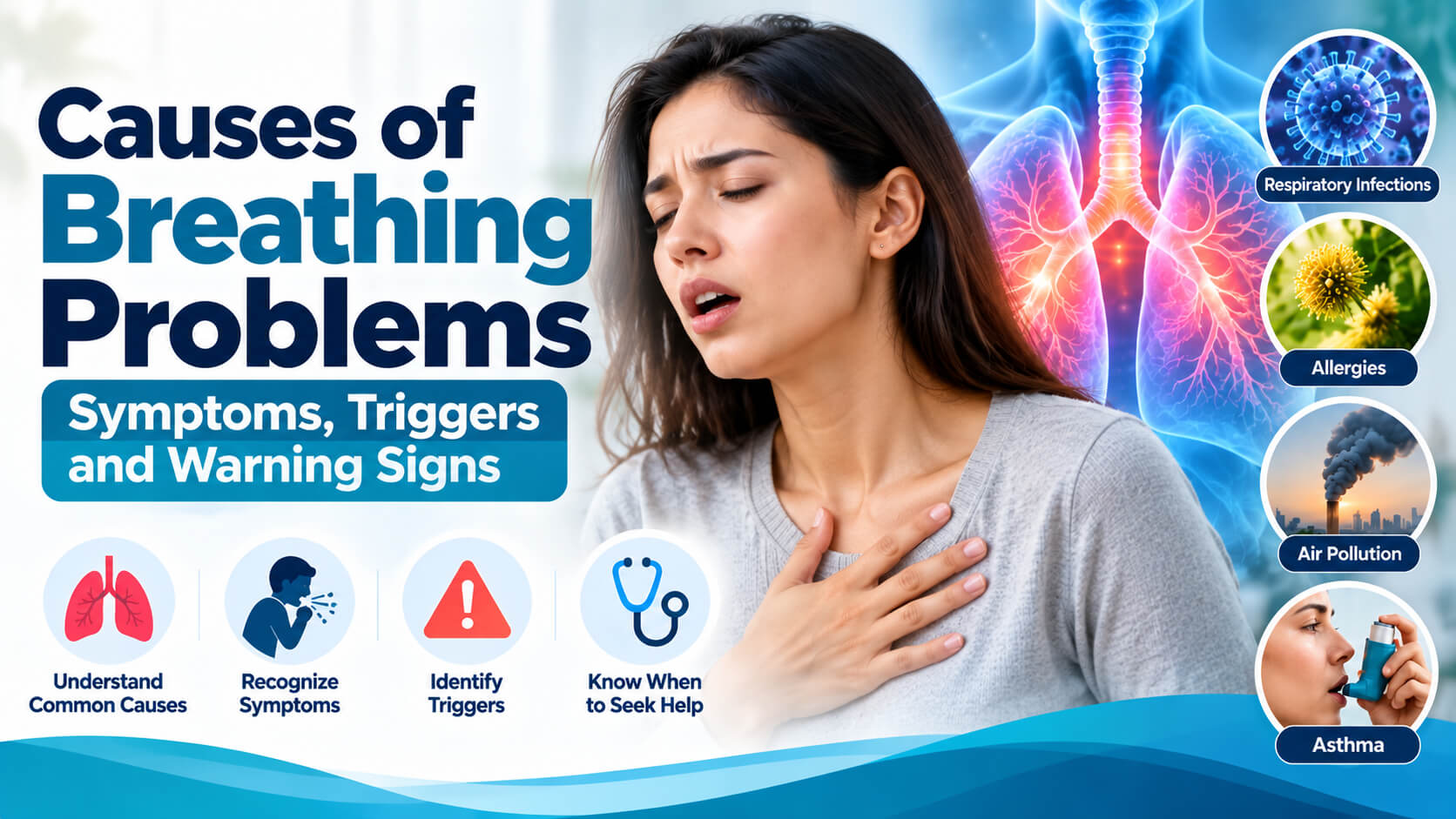
Breathing problems, also called breathing difficulties or shortness of breath, occur when breathing feels uncomfortable, difficult, or insufficient. The experience can differ from person to person. Some people notice breathlessness while walking or climbing stairs. Others experience coughing, wheezing, chest tightness, or difficulty breathing even while resting.
Feeling slightly breathless after strenuous physical activity can be normal. However, new, unexplained, persistent, or worsening breathing difficulties should not be ignored.
What Are the Common Causes of Breathing Problems?
Breathing difficulties can develop for several reasons. Identifying the underlying cause is important because different conditions may require different forms of medical care.
1. Asthma
Asthma is a long-term condition that affects the airways. Inflammation and narrowing of the airways can make breathing difficult, particularly when symptoms flare up.
Common symptoms include wheezing, coughing, chest tightness, and shortness of breath. Symptoms may become more noticeable at night, during physical activity, or after exposure to certain environmental triggers.
People experiencing recurring breathing symptoms should seek professional assessment rather than assume they have asthma.
Related reading: Asthma Symptoms, Causes & Management: A Patient Education Guide.
2. Respiratory Infections
Respiratory infections can affect the nose, throat, airways, or lungs. Depending on the infection, symptoms may include coughing, congestion, fever, fatigue, and breathing difficulties.
Some infections are mild, while others, including pneumonia, can become serious. Breathing difficulties accompanied by fever, chest pain, or worsening symptoms deserve prompt medical attention.
A healthcare professional can help determine whether symptoms are consistent with an infection or another condition.
3. Allergies
Allergies occur when the immune system reacts to a substance that it considers harmful. Common allergens include pollen, dust mites, mold, and animal dander.
Allergic reactions may cause sneezing, a runny or blocked nose, itchy eyes, or coughing. In some people, allergens may also trigger asthma symptoms.
A severe allergic reaction involving swelling of the tongue or throat, or significant difficulty breathing, is a medical emergency.
Related reading: Seasonal Allergies: Symptoms, Causes, Treatment & Prevention.
4. Chronic Lung Conditions
Some long-term lung conditions can cause persistent breathlessness, coughing, wheezing, or reduced ability to exercise.
Chronic obstructive pulmonary disease (COPD), for example, affects airflow through the lungs. Other lung conditions may affect lung tissue or the movement of oxygen into the bloodstream.
Symptoms that gradually worsen, limit everyday activities, or occur with minimal exertion should be assessed by a healthcare professional.
5. Heart-Related Conditions
Breathing difficulties do not always originate in the lungs. Some heart conditions can affect the body's ability to circulate blood effectively and may lead to breathlessness.
Possible warning signs include shortness of breath during activity or while lying down, swelling in the legs or ankles, unusual fatigue, or chest discomfort.
Sudden breathlessness with chest pressure, pain spreading to the arm or jaw, or faintness requires emergency assessment.
6. Anxiety and Panic Episodes
Anxiety and panic episodes can sometimes cause rapid breathing, chest tightness, dizziness, or a sensation of not getting enough air.
However, these symptoms can overlap with serious physical conditions. New or unexplained breathing difficulties should not automatically be attributed to anxiety.
A healthcare professional can assess possible causes and discuss appropriate support when anxiety contributes to symptoms.
Common Symptoms to Watch For
The symptoms accompanying breathing difficulties may provide useful information, but they cannot reliably establish a diagnosis on their own.
Possible symptoms include:
- Shortness of breath during everyday activities.
- Wheezing or noisy breathing.
- Persistent coughing.
- Chest tightness or discomfort.
- Rapid or unusually difficult breathing.
- Fever or other signs of infection.
- Unusual fatigue or reduced exercise tolerance.
- Breathlessness that becomes worse when lying down.
Record when symptoms began, how frequently they occur, and whether they are getting worse. Share this information with a healthcare professional.
What Can Make Breathing Symptoms Worse?
Certain environmental and personal factors may contribute to breathing difficulties, depending on the underlying condition.
Air Pollution and Smoke
Air pollution, tobacco smoke, and strong fumes can irritate the respiratory system. Reducing exposure where practical may be helpful, particularly for people with asthma or other lung conditions.
Pollen and Indoor Allergens
Pollen, mold, dust mites, and animal dander can trigger symptoms in susceptible individuals. Identifying personal triggers may help people discuss appropriate prevention measures with their healthcare professional.
For more information, read our guide to Common Allergy Triggers: What Causes Allergy Symptoms?
Physical Exertion
Exercise increases the body's demand for oxygen, so breathing naturally becomes faster during activity. However, unusually severe breathlessness or symptoms that occur with minimal exertion need assessment.
Respiratory Illness
A respiratory infection may temporarily affect breathing or worsen an existing lung condition. People with persistent or worsening symptoms should seek medical advice.
How Are Breathing Problems Evaluated?
The appropriate assessment depends on the symptoms, their severity, and the person's medical history.
A healthcare professional may ask:
- When did the breathing difficulty begin?
- Does it happen during activity, at rest, or while lying down?
- Are coughing, fever, wheezing, or chest discomfort present?
- Is there a history of asthma, allergies, or heart or lung disease?
- Have symptoms changed recently?
Depending on the findings, the evaluation may include a physical examination, oxygen-level measurement, lung-function testing, blood tests, or imaging. Not everyone needs every test. The healthcare professional determines which assessments are appropriate based on the individual's situation.
What Should You Do About Persistent Breathing Difficulties?
If breathing problems are new, recurring, unexplained, or becoming worse, arrange medical assessment.
While waiting for professional advice, avoid unnecessary exposure to known irritants and follow any existing care plan provided by your healthcare professional. If you already have a diagnosed respiratory condition, follow your prescribed instructions.
Do not assume that every episode of breathlessness is asthma or an allergy. Avoid changing prescribed treatment or starting medication based solely on online information. If severe symptoms develop, do not delay emergency care.
When Are Breathing Problems an Emergency?
Seek emergency medical assistance immediately if a person:
- Is struggling to breathe or gasping for air.
- Cannot speak normally because of breathlessness.
- Develops blue or grey lips or skin, or becomes suddenly confused.
- Experiences severe or persistent chest pressure or pain.
- Develops serious breathing difficulties with swelling of the tongue or throat.
Sudden or rapidly worsening breathing difficulty can have serious causes. Do not wait to see whether it improves on its own.
Frequently Asked Questions
What is the most common cause of breathing problems?
There is no single cause that applies to everyone. Asthma, respiratory infections, allergies, heart conditions, and other health problems can all contribute to breathing difficulties.
Can allergies cause shortness of breath?
Yes. Allergies may trigger respiratory symptoms in some people, particularly those who also have asthma. Severe allergic reactions affecting breathing require emergency care.
Can anxiety cause breathing difficulties?
Anxiety and panic episodes can affect breathing, but other medical causes may produce similar symptoms. New or unexplained symptoms should be professionally assessed.
When should I see a doctor for shortness of breath?
Seek medical advice if breathlessness is new, persistent, worsening, occurs during ordinary activities, or interferes with sleep. Severe breathing difficulty requires emergency assistance.
Can breathing problems be prevented?
Not all causes can be prevented. Reducing exposure to known irritants, following an individualized medical care plan, and seeking timely assessment may help manage some underlying conditions.
Conclusion
Breathing problems can have many causes, including asthma, allergies, infections, and heart or lung conditions. Recognizing associated symptoms and understanding warning signs can help people decide when to seek medical care.
Persistent, unexplained, or worsening breathlessness should be evaluated by a qualified healthcare professional. Severe breathing difficulties are an emergency and require immediate assistance.
Browse LalaRX Health Options
Medical Disclaimer: This article is for general educational purposes only. It does not replace a medical diagnosis, individualized treatment advice, or emergency care.
Sources: NHS guidance on shortness of breath; MedlinePlus information about breathing difficulty.