
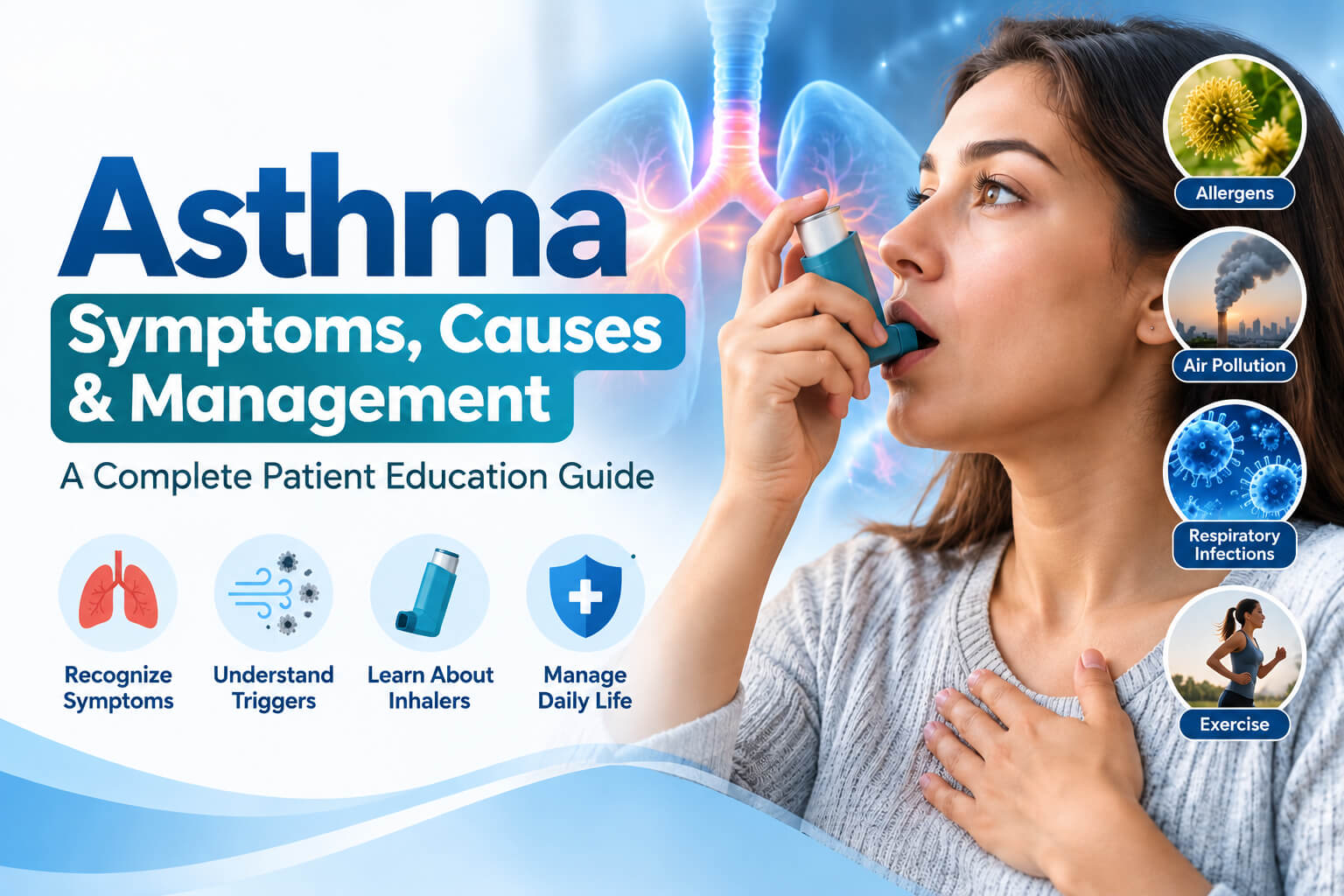
Quick Answer: What Is Asthma?
Asthma is a chronic respiratory condition in which the airways become inflamed and narrower, sometimes producing extra mucus. Symptoms may come and go and can be triggered by allergens, respiratory infections, exercise, smoke, cold air, or air pollution. Diagnosis and treatment should be guided by a qualified healthcare professional.
What Is Asthma?
Asthma is a long-term condition that affects the airways responsible for carrying air into and out of the lungs.
In people with asthma, the airways may become inflamed, narrow, and produce additional mucus in response to certain triggers. These changes can make breathing more difficult and cause symptoms that vary in frequency and severity.
Asthma affects children and adults. Some people experience occasional symptoms, while others need ongoing treatment and monitoring.
Although asthma has no known cure, appropriate management can help reduce symptoms, lower the risk of asthma attacks, and support everyday activities.
Explore LalaRX Respiratory GuidesCommon Asthma Symptoms
Asthma symptoms can differ from one person to another. They may appear occasionally, become worse at particular times, or interrupt sleep and daily activities.
Common symptoms include:
- Wheezing: A whistling sound when breathing, particularly when breathing out.
- Coughing: A persistent or recurring cough, sometimes worse at night or early in the morning.
- Shortness of breath: Feeling that it is difficult to get enough air.
- Chest tightness: A feeling of pressure or tightness in the chest.
Symptoms may become worse during exercise, respiratory infections, or exposure to certain environmental triggers.
These symptoms do not always indicate asthma. Other health conditions can cause similar problems, so a healthcare professional should assess persistent or recurring breathing symptoms.
What Causes Asthma?
The exact causes of asthma are not fully understood. Genetic factors, environmental exposures, and differences in how the immune system responds to substances in the environment may contribute to its development.
Factors associated with asthma risk can include:
- A family history of asthma or allergies.
- Exposure to tobacco smoke or air pollution.
- Allergic conditions, such as hay fever or eczema.
- Certain environmental or workplace exposures.
- Respiratory infections and other factors affecting the airways.
Having one or more of these factors does not necessarily mean that someone will develop asthma. The condition can affect people with different medical histories and backgrounds.
Common Asthma Triggers
Asthma triggers are substances, activities, or environmental conditions that can start or worsen symptoms in people with asthma. Triggers vary from person to person.
1. Allergens
Indoor and outdoor allergens may trigger symptoms in sensitive individuals. Examples include pollen, dust mites, mold, and pet dander. People who have both asthma and allergies may notice that their breathing symptoms become worse after exposure to common allergy triggers. Additionally, triggers like seasonal allergies can significantly impact respiratory health during specific times of the year.
2. Smoke and Air Pollution
Tobacco smoke, polluted air, fumes, and some airborne irritants can worsen asthma symptoms. Reducing exposure to smoke and avoiding environments with poor air quality may help some people manage their condition.
3. Respiratory Infections
Viral respiratory infections, including colds and influenza, can worsen asthma symptoms in some people. Following an asthma management plan and discussing recurring infection-related symptoms with a healthcare professional may help support better control.
4. Exercise
Physical activity can trigger asthma symptoms in some individuals. However, asthma does not automatically mean that exercise must be avoided. Appropriate treatment and advice from a healthcare professional can help many people remain active safely.
5. Cold Air and Weather Changes
Cold air and changes in weather may trigger symptoms for some people. Recognizing individual patterns can help with planning activities and managing exposure.
Helpful tip: Keep a record of when symptoms occur and what you were doing or exposed to at the time. This information may help your healthcare professional identify possible triggers.
How Is Asthma Diagnosed?
Asthma diagnosis involves assessing symptoms, medical history, and breathing function. Because symptoms can come and go, diagnosis may require more than one assessment.
A healthcare professional may:
- Ask about recurring cough, wheezing, breathlessness, and chest tightness.
- Review possible triggers and family history.
- Examine breathing and listen to the chest.
- Recommend lung function testing, such as spirometry.
- Consider additional tests when needed to investigate other possible causes.
Do not assume that recurring breathing difficulties are asthma without an appropriate assessment. A professional evaluation can help distinguish asthma from other respiratory conditions.
Understanding Reliever and Preventer Inhalers
Inhaled medicines are an important part of asthma treatment. The appropriate treatment depends on the person's symptoms, age, asthma severity, medical history, and response to previous treatment.
What Are Reliever Inhalers?
Reliever medicines help ease asthma symptoms by relaxing muscles around the airways or through other prescribed treatment mechanisms. Some reliever inhalers contain short-acting bronchodilators. Other treatment plans use inhalers that combine an anti-inflammatory medicine with a medicine that helps open the airways.
The type of reliever and when to use it should follow the person's prescribed treatment plan.
What Are Preventer Inhalers?
Preventer or controller treatments help reduce airway inflammation and the risk of future symptoms. Some contain inhaled corticosteroids and are prescribed for regular use.
Preventer medicines are not interchangeable with every type of reliever inhaler. Patients should understand which inhaler they have, how it should be used, and what their asthma action plan recommends.
Why Is Correct Inhaler Technique Important?
Incorrect inhaler technique can prevent medicine from reaching the lungs as intended. A doctor, nurse, or pharmacist can demonstrate the correct technique for a specific device. Patients should also attend recommended reviews to check that their treatment remains suitable.
Important: Do not start, stop, or change asthma medicines without advice from a qualified healthcare professional.
How to Manage Asthma in Daily Life
Daily asthma management involves following the prescribed treatment plan, understanding personal triggers, and monitoring changes in symptoms.
Follow Your Asthma Action Plan
An asthma action plan explains how to manage asthma when symptoms are stable, what changes to watch for, and what steps to take if symptoms worsen. Work with a healthcare professional to create or update a plan suited to your needs.
Recognize Changes in Symptoms
Pay attention to symptoms that become more frequent, interfere with sleep, or limit normal activities. Needing a prescribed reliever more often than usual may also indicate that asthma control needs to be reviewed.
Reduce Exposure to Known Triggers
When possible, reduce exposure to triggers that have been identified as relevant to your asthma. This may involve avoiding smoke, addressing indoor dampness and mold, or monitoring air quality.
Attend Regular Medical Reviews
Regular reviews help assess symptom control, check inhaler technique, and determine whether the treatment plan needs adjustment.
Stay Active With Appropriate Guidance
Many people with asthma can participate in physical activity. If exercise triggers symptoms, discuss appropriate management with a healthcare professional instead of automatically avoiding all activity.
When Should You Seek Medical Help?
Speak with a healthcare professional if:
- You experience recurring wheezing, coughing, or breathlessness.
- Asthma symptoms interfere with sleep or daily activities.
- Your symptoms are becoming more frequent or difficult to manage.
- Your prescribed inhaler does not seem to be helping as expected.
- You need advice about inhaler technique or your asthma action plan.
When Is Asthma an Emergency?
A severe asthma attack can be life-threatening. Seek emergency medical assistance if breathing becomes severely difficult, symptoms rapidly worsen, you cannot speak normally because of breathlessness, or your prescribed emergency treatment is not helping as expected.
Follow your personal asthma action plan and local emergency guidance. Do not delay emergency care while trying home remedies.
Frequently Asked Questions About Asthma
What are the most common symptoms of asthma?
Common symptoms include wheezing, coughing, shortness of breath, and chest tightness. Symptoms may come and go and can become worse at night, during exercise, or after exposure to certain triggers.
Can asthma be cured?
There is currently no cure for asthma. However, appropriate treatment and regular monitoring can help many people control symptoms and reduce the risk of attacks.
What can trigger asthma symptoms?
Common triggers include pollen, dust mites, mold, pet dander, smoke, air pollution, respiratory infections, exercise, and cold air. Individual triggers vary.
What is the difference between a reliever and a preventer inhaler?
Reliever treatments help manage symptoms according to the prescribed plan, while preventer or controller treatments help reduce airway inflammation and future symptoms. Some prescribed inhalers can serve both purposes.
Can people with asthma exercise?
Yes. Many people with asthma can exercise safely when their condition is appropriately managed. Anyone who experiences exercise-related symptoms should discuss an appropriate plan with a healthcare professional.
How often should asthma be reviewed?
Review frequency depends on symptom control, treatment, and individual circumstances. Regular appointments help check symptoms, inhaler technique, and whether the treatment plan remains appropriate.
What should I do if my asthma symptoms suddenly become severe?
Follow your prescribed asthma action plan and seek emergency medical assistance if symptoms are severe, worsening rapidly, or not responding to your prescribed emergency treatment.
Final Thoughts
Asthma is a long-term respiratory condition, but understanding its symptoms, triggers, and treatment options can help people make informed decisions about their care.
Recognizing changes in breathing, following a prescribed asthma action plan, using inhalers correctly, and attending regular medical reviews are important parts of asthma management.
If you experience recurring breathing difficulties or your symptoms are not well controlled, consult a qualified healthcare professional for an appropriate assessment.
Browse LalaRX Pharmacy Options
Medical Disclaimer: This article is intended for general educational purposes only. It does not replace professional medical advice, diagnosis, or treatment. Do not use this information to diagnose asthma or change prescribed medicines. Consult a qualified healthcare professional about individual symptoms and treatment decisions. Seek emergency medical assistance for severe breathing difficulties.
Sources: NHS — Asthma, NHLBI — Asthma Symptoms, NHLBI — Asthma Causes and Triggers, NHLBI — Asthma Treatment and Action Plan, CDC — What to Do When an Emergency Occurs.