
Quick Answer
Allergy symptoms are commonly triggered by pollen, dust mites, mold, pet dander, or other allergens.
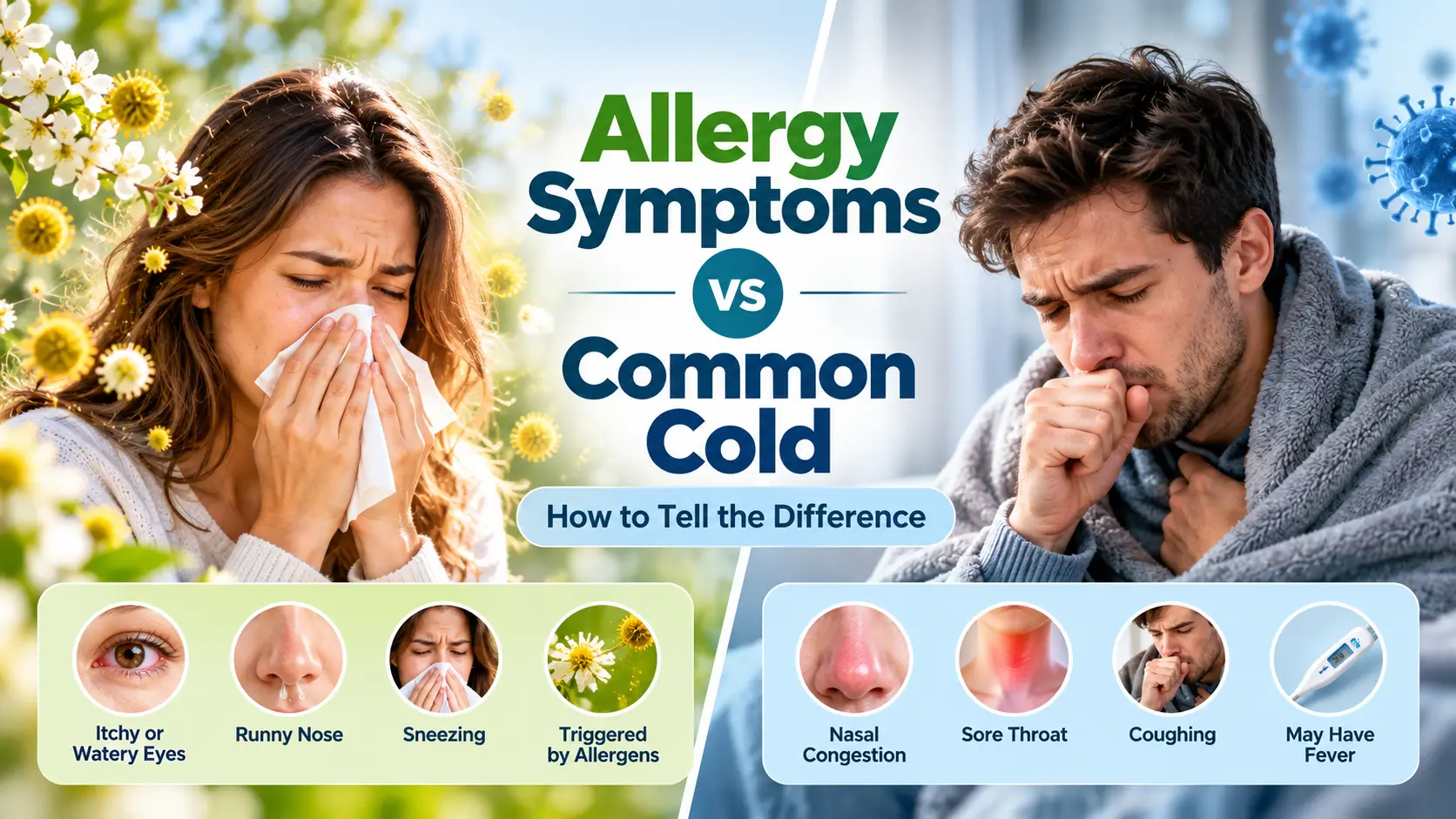
A common cold is caused by a virus. Itchy or watery eyes and symptoms that appear after allergen exposure are more suggestive of allergies, .lalarx-blog-main-content awhile a cold may be more likely when symptoms develop after contact with someone who is sick and gradually improve as the infection resolves.
Allergy Symptoms vs Cold: What Is the Difference?
Allergies and the common cold can affect the nose, throat, and eyes, which is why they are sometimes confused.
With allergies, symptoms occur because the immune system reacts to a substance that is usually harmless to most people. Common triggers include pollen, mold, dust mites, and animal dander.
A common cold, on the other hand, is a viral infection. The symptoms usually develop as the body responds to the infection and generally improve as the illness resolves.
Neither condition should be diagnosed from symptoms alone. If you are unsure about the cause of persistent or concerning symptoms, consider speaking with a healthcare professional.
Explore LalaRX Allergy InformationCommon Allergy Symptoms
Allergy symptoms can vary depending on the person and the allergen involved. Common symptoms include:
- Sneezing
- Runny nose
- Stuffy or congested nose
- Itchy nose
- Itchy or watery eyes
- Throat irritation
- Coughing
- Postnasal drip
- Fatigue
Itchy, red, or watery eyes are particularly common with allergic rhinitis and may be less typical of a common cold.
Allergy symptoms may also appear repeatedly when a person is exposed to a specific trigger. For example, someone with seasonal allergies may notice symptoms during periods when certain pollen levels are higher.
Common Cold Symptoms
A common cold can cause symptoms such as:
- Runny or stuffy nose
- Sneezing
- Coughing
- Sore throat
- Mild fatigue
- General discomfort
Some people may also experience a fever or body aches, although symptoms can vary.
Unlike allergies, a common cold is caused by a virus and can spread from person to person.
Allergy Symptoms vs Cold: A Quick Comparison
| Symptom or Feature | Allergies | Common Cold |
|---|---|---|
| Main cause | Allergens | Virus |
| Sneezing | Common | Common |
| Runny nose | Common | Common |
| Nasal congestion | Common | Common |
| Itchy eyes | Common | Less typical |
| Watery eyes | Common | Less typical |
| Itchy nose or throat | Common | Less typical |
| Fever | Usually not present | May occur |
| Body aches | Less typical | May occur |
| Triggered by pollen or allergens | Often | No |
| Contagious | No | Yes |
| Symptoms may repeat with exposure | Often | Usually no |
These differences are general patterns rather than a diagnosis. Some symptoms can overlap, and other respiratory conditions may cause similar problems.
How Can You Tell If It Is Allergies or a Cold?
Several clues may help you understand the difference.
1. Look at the Trigger
Think about when your symptoms began. If symptoms repeatedly appear after exposure to pollen, dust, pets, mold, or another known allergen, allergies may be more likely. A cold does not require exposure to an allergen. Instead, it occurs after infection with a virus.
2. Pay Attention to Itchy Eyes
Itchy, red, or watery eyes are common with allergies. They can occur with other conditions too, but prominent eye itching can be a useful clue when trying to distinguish allergies from a cold.
3. Consider Whether You Have a Fever
Allergies generally do not cause a fever. A fever can occur with infections, including some respiratory infections. However, the absence or presence of fever alone cannot determine the cause of your symptoms.
4. Think About Whether Symptoms Repeat
Allergies can follow a predictable pattern. For example, symptoms may appear around the same time each year or after exposure to a particular allergen. A common cold usually follows a different pattern because it is caused by an infection rather than an environmental allergen.
5. Consider Exposure to Someone Who Is Sick
A common cold can spread between people. If you recently spent time with someone who had a respiratory illness and then developed similar symptoms, an infection may be one possible explanation. Allergies, however, are not contagious.
How Long Do Allergies and Colds Last?
The duration can vary for both conditions.
Allergy symptoms may continue while you are exposed to the allergen. Seasonal allergies can return during particular periods of the year, depending on the allergens involved and local environmental conditions.
A common cold generally improves as the viral infection resolves. Symptoms may change over the course of the illness rather than continuing only when a particular allergen is present.
If symptoms continue for an unusually long time, repeatedly return, become more severe, or do not respond to appropriate care, talk with a healthcare professional.
Can Allergies Feel Like a Cold?
Yes. Allergies can feel similar to a cold because both can cause:
- Sneezing
- Runny nose
- Nasal congestion
- Coughing
- Throat irritation
- Tiredness
The difference is what causes those symptoms. Allergies result from an immune response to allergens. A cold results from a viral infection.
This is why looking at the overall pattern—including triggers, eye symptoms, fever, exposure, and recurrence—can be more useful than focusing on one symptom.
What Can You Do If You Are Not Sure?
If you are unsure whether your symptoms are caused by allergies or a cold, start by observing the pattern. Consider:
- When did the symptoms begin?
- Were you exposed to pollen, dust, mold, pets, or another possible allergen?
- Are your eyes itchy or watery?
- Do symptoms happen at a particular time of year?
- Have you been around someone who is sick?
- Are symptoms improving, staying the same, or becoming worse?
Keeping track of symptoms and possible triggers can give you useful information to discuss with a healthcare professional.
How Are Allergy Symptoms Managed?
Managing allergies often involves reducing exposure to known triggers and using treatments recommended by a healthcare professional.
Depending on the individual, healthcare professionals may recommend approaches such as antihistamines, nasal treatments, allergy eye drops, saline rinses, or other options. The appropriate approach depends on the person's symptoms, triggers, age, medical history, and other health considerations.
Do not start, stop, or change medication based solely on information in an online article. Follow product directions and speak with a qualified healthcare professional when you are unsure what is appropriate for you.
How Can You Manage a Common Cold?
Most common colds improve with time and supportive care.
Helpful measures may include getting adequate rest, drinking enough fluids, and managing symptoms appropriately. Because several illnesses can cause cold-like symptoms, persistent or worsening symptoms should be discussed with a healthcare professional.
When Should You Talk With a Healthcare Professional?
Consider seeking medical advice if:
- Symptoms are persistent or repeatedly return.
- Symptoms interfere with sleep or everyday activities.
- You are unsure whether you have allergies or an infection.
- Symptoms become more severe.
- Symptoms do not improve as expected.
- You have another health condition that may be affected by respiratory symptoms.
- You have concerns about a child's symptoms.
A healthcare professional can review your symptoms, medical history, possible triggers, and other relevant factors to help determine the appropriate next steps. If symptoms are severe or rapidly worsening, seek appropriate urgent medical care.
Frequently Asked Questions
Are allergies and a cold the same thing?
No. Allergies are caused by an immune response to allergens, while a common cold is caused by a virus.
How can I tell if I have allergies or a cold?
Look at the overall pattern. Itchy or watery eyes, repeated symptoms after allergen exposure, and seasonal patterns can suggest allergies. A cold is an infection and may occur after exposure to someone who is sick.
Can allergies cause a runny nose?
Yes. A runny nose is a common symptom of allergic rhinitis.
Can a cold cause itchy eyes?
Itchy eyes are less typical of a common cold than they are of allergies. However, symptoms can vary from person to person.
Do allergies cause fever?
Allergies generally do not cause fever. Fever is more commonly associated with infections, although symptoms should always be considered in context.
Are allergies contagious?
No. Allergies are not contagious because they are caused by an immune response to allergens rather than an infectious virus.
Can allergies last longer than a cold?
They can. Allergy symptoms may continue as long as a person remains exposed to the triggering allergen. A common cold generally improves as the viral infection resolves.
When should I see a healthcare professional?
Consider speaking with a healthcare professional if symptoms persist, become severe, interfere with daily activities, or if you are uncertain about their cause.
Final Thoughts
Knowing the difference between allergy symptoms vs cold can help you better understand what may be causing sneezing, congestion, coughing, and other respiratory symptoms.
Allergies are related to an immune response to allergens, while a common cold is caused by a virus. Itchy or watery eyes, recurring symptoms after allergen exposure, and seasonal patterns may point toward allergies, while symptoms associated with an infectious illness may suggest a cold.
When symptoms are persistent, severe, or difficult to understand, professional medical advice can help you determine the appropriate next step.
Browse LalaRX Pharmacy Options
Medical Disclaimer: This article is provided for general educational and informational purposes only. It is not intended to diagnose, treat, cure, or prevent any disease or condition, and it does not replace advice from a qualified healthcare professional. Always consult an appropriate healthcare professional regarding individual health concerns and treatment decisions.
Sources: MedlinePlus — Allergic Rhinitis, Mayo Clinic — Allergies and Hay Fever, Cleveland Clinic — Allergic Rhinitis (Hay Fever).