
What Are Parasitic Infections?
A parasite is an organism that lives on or inside a host and obtains nourishment from that host. Some parasites are microscopic, while others are larger and may be visible without a microscope.
According to the Centers for Disease Control and Prevention (CDC), parasites that can cause human diseases are generally classified into three major groups:
1. Protozoa
Protozoa are microscopic, single-celled organisms. Some can affect the intestines and cause digestive problems, while others may affect the blood or tissues. Certain intestinal protozoa spread through contaminated food or drinking water. Symptoms may include diarrhoea, abdominal discomfort, and bloating.
2. Helminths
Helminths are parasitic worms. They include roundworms, tapeworms, and flukes. Some intestinal worm infections may cause abdominal pain, diarrhoea, nutritional problems, or other symptoms. The effects depend on the particular organism and the severity of infection.
3. Ectoparasites
Ectoparasites live on the surface of the body rather than inside it. Examples include mites, ticks, and lice. Some may cause itching, skin irritation, or allergic reactions. Certain ectoparasites can also transmit other infectious organisms.
Explore LalaRX Health GuidesCommon Parasitic Infection Symptoms
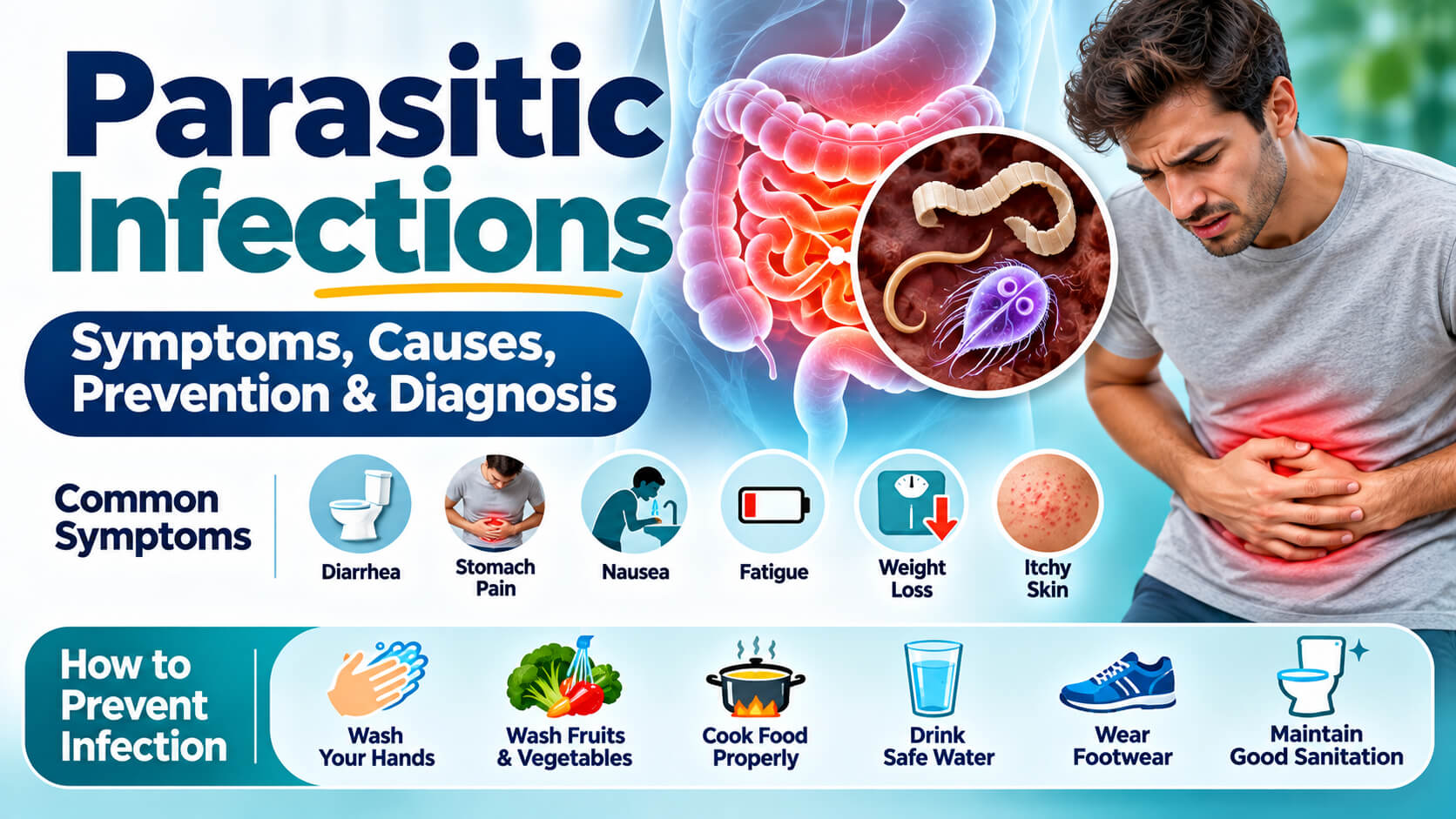
Parasitic infection symptoms vary depending on the organism, the affected part of the body, and the person's overall health. Some people experience noticeable symptoms, while others may not realize they have an infection.
Common possible symptoms include:
- Diarrhoea or changes in bowel habits
- Abdominal pain or discomfort
- Nausea and digestive disturbances
- Bloating and excessive gas
- Unexplained fatigue
- Itching or skin irritation
- Reduced appetite
- Unexplained weight changes
These symptoms are not exclusive to parasitic infections. Digestive disorders, food intolerance, bacterial infections, and other health conditions can cause similar problems. For this reason, symptoms alone should not be used to diagnose a parasitic infection.
What Causes Parasitic Infections?
Parasites can enter the human body through several routes. Understanding these transmission routes can help people make safer everyday choices.
1. Contaminated Food
Food can become contaminated during production, preparation, storage, or handling. Some parasites may be transmitted through improperly prepared meat, fish, seafood, or contaminated vegetables. Eating food that has not been handled safely can increase the risk of foodborne illness.
2. Unsafe Drinking Water
Water from contaminated sources may contain organisms capable of causing intestinal infections. Drinking untreated or unsafe water can increase exposure, particularly in areas where sanitation and water treatment are limited.
3. Contaminated Soil
Some parasitic worms spread through soil contaminated with human waste. Certain larvae can enter the body through the skin, while other infections may occur after contaminated material reaches the mouth. Environmental sanitation is therefore an important part of reducing transmission.
4. Insect Bites
Some parasites are transmitted by infected insects. Mosquitoes and other insects can act as carriers for certain parasitic diseases. The risk depends on the parasite, the insect species, and the geographical area.
5. Person-to-Person Transmission
Some intestinal parasites can spread between people through contaminated hands, surfaces, or objects. Good personal hygiene and proper sanitation can help reduce the possibility of transmission.
How Are Parasitic Infections Diagnosed?
Accurate diagnosis is important because different parasites may cause similar symptoms but require different medical assessments.
A healthcare professional may review the patient's symptoms, medical history, travel history, and possible exposure to contaminated food or water. Depending on the suspected infection, the following investigations may be considered.
Stool Examination
A stool examination may help identify parasite eggs, larvae, or organisms associated with intestinal infections. In some cases, more than one stool sample collected on separate days may be required to improve the chances of detection.
Blood Tests
Blood tests may help identify certain parasitic infections or provide additional information about the body's response to infection. The appropriate test depends on the suspected organism.
Imaging and Other Investigations
Some infections affect organs or tissues outside the digestive system. A healthcare professional may recommend imaging or other specialized tests when necessary. Not every patient requires every test. The choice depends on the symptoms and clinical findings.
How Can You Help Prevent Parasitic Infections?
Although not every infection can be prevented, several everyday hygiene and food-safety practices may reduce exposure.
Wash Your Hands Properly
Wash your hands with soap and clean water:
- Before preparing or eating food
- After using the toilet
- After handling soil or waste
- After touching animals
- After returning home from outside activities
Handwashing is an important way to reduce the spread of organisms that may contaminate food or surfaces.
Drink Safe Water
Use drinking water from a reliable, safe source. Where water safety is uncertain, follow appropriate local public-health guidance for making water safe. Avoid assuming that water from an untreated natural source is suitable for drinking.
Wash Fruits and Vegetables
Wash fresh fruits and vegetables thoroughly before eating or preparing them. Keep raw food separate from cooked food, and use clean utensils and preparation surfaces.
Prepare Food Safely
Follow food-safety guidance when preparing meat, fish, seafood, and other foods. Thorough cooking and hygienic food handling help reduce exposure to certain foodborne parasites.
Wear Suitable Footwear
Wear shoes when walking in soil that may be contaminated with human waste. Some parasitic larvae can enter the body through exposed skin.
Maintain Proper Sanitation
Safe toilets, proper waste disposal, and clean surroundings help reduce environmental contamination. Community-level sanitation is important because preventing parasitic infections is not only an individual responsibility.
When Should You Seek Medical Advice?
Consider consulting a qualified healthcare professional if you experience persistent digestive problems, unexplained skin symptoms, or other ongoing health concerns. Medical assessment is especially important when symptoms occur after possible exposure to contaminated food, water, or soil.
Seek prompt medical attention for:
- Persistent or severe diarrhoea
- Blood in the stool
- Severe abdominal pain
- Signs of dehydration
- Persistent fever
- Unexplained and significant weight changes
Severe dehydration, fainting, confusion, or an inability to keep fluids down may require urgent medical care.
Avoid assuming that every digestive problem is caused by parasites. A proper assessment can help identify the actual cause.
Frequently Asked Questions
What are the most common parasitic infection symptoms?
Common symptoms may include diarrhoea, abdominal discomfort, nausea, bloating, fatigue, and itching. However, symptoms vary according to the type of parasite.
Can parasitic infections occur without symptoms?
Yes. Some people with parasitic infections experience mild symptoms or none at all. The absence of symptoms does not always rule out infection.
How do intestinal parasites spread?
Some intestinal parasites spread through contaminated food, drinking water, soil, or contact with contaminated hands and surfaces.
Can contaminated vegetables cause parasitic infections?
Yes. Vegetables may become contaminated through unsafe water, soil, or handling practices. Washing fresh produce and following safe food-preparation practices can help reduce risk.
Are all parasitic infections the same?
No. Different parasites affect different parts of the body and cause different health problems. Diagnosis and medical management depend on the organism involved.
When should someone get tested for a parasitic infection?
Testing may be appropriate when symptoms, medical history, or possible exposure suggest an infection. A healthcare professional can determine which investigation is suitable.
Conclusion
Parasitic infections can affect different parts of the human body and may cause a wide range of symptoms. Contaminated food, unsafe water, soil exposure, and insect bites are among the possible routes of transmission.
Understanding parasitic infection symptoms, maintaining good hygiene, practising safe food handling, and seeking medical assessment when necessary can support better health awareness.
If you experience persistent or unexplained symptoms, consult a qualified healthcare professional rather than relying on self-diagnosis.
Browse LalaRX Pharmacy Options
Medical Disclaimer: This article is intended for general educational purposes only. It does not provide a medical diagnosis or personalized treatment advice. Always consult a qualified healthcare professional about health concerns.
Sources: Centers for Disease Control and Prevention (CDC) — About Parasites; CDC — Causes of Parasitic Diseases; CDC — Diagnosis of Parasitic Diseases; World Health Organization (WHO) — Food Safety.