
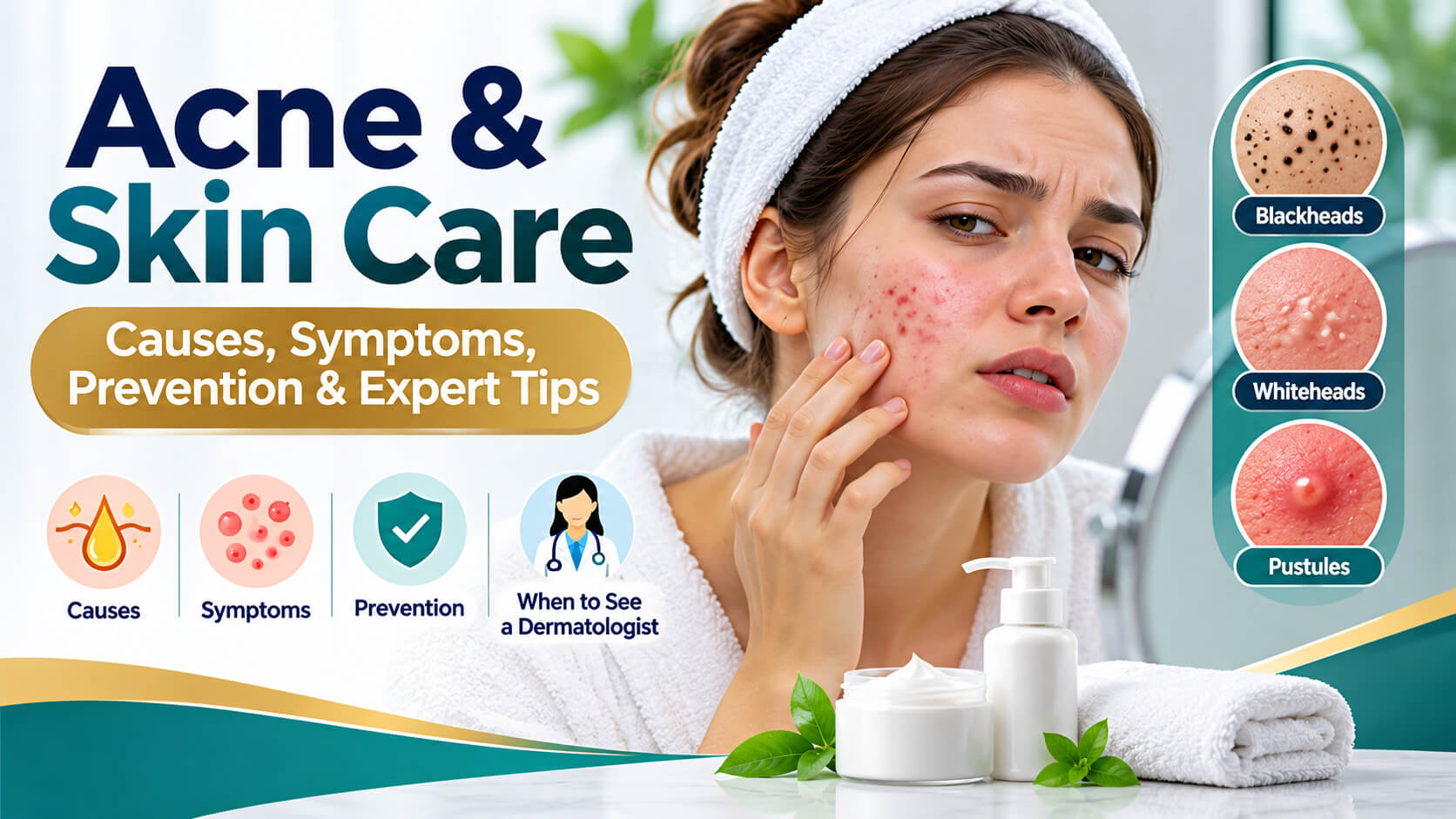
What Is Acne?
Acne is a skin condition that develops when hair follicles become blocked. These follicles contain sebaceous glands, which produce an oily substance called sebum.
Sebum helps protect and moisturize the skin. However, when excess oil and dead skin cells accumulate inside a follicle, the opening can become blocked. Bacteria naturally present on the skin may contribute to inflammation within blocked follicles.
Acne can appear on several areas of the body, including:
- Face and forehead
- Nose and chin
- Chest
- Shoulders
- Upper back
The appearance and severity of acne vary between individuals. Some people develop a few small spots, while others experience deeper and more persistent breakouts.
Explore LalaRX Skin Care GuidesWhat Causes Acne?
There is no single cause of acne. Several biological and environmental factors may contribute to its development.
1. Hormonal Changes
Hormonal changes can influence the activity of sebaceous glands. During puberty, for example, changes in hormone levels can increase oil production. Hormonal fluctuations can also occur during other stages of life. These changes may contribute to acne in some individuals.
2. Excess Sebum Production
Sebum is naturally produced to protect the skin. However, increased oil production can contribute to blocked pores, particularly when combined with dead skin cells. People with oilier skin may notice more frequent breakouts, although skin type alone does not determine whether someone develops acne.
3. Dead Skin Cell Accumulation
Skin naturally sheds dead cells. Sometimes these cells accumulate inside hair follicles and combine with oil, contributing to blocked pores. This process can lead to blackheads, whiteheads, and other acne lesions.
4. Bacterial Activity and Inflammation
Bacteria associated with acne can contribute to inflammation within blocked follicles. This may result in red, swollen, or painful spots. Deeper inflammation can sometimes lead to scarring.
5. Genetics
Family history may influence the likelihood of developing acne. People whose close family members experienced persistent acne may also be more likely to experience it. However, genetics do not determine exactly how severe someone's acne will become.
6. Certain Skin and Hair Care Products
Some oily or unsuitable skincare and hair-care products may contribute to blocked pores. People who experience frequent breakouts may find it helpful to check product labels and look for terms such as non-comedogenic or oil-free. These labels indicate that a product is designed to be less likely to block pores, although individual reactions can still vary.
Common Types of Acne
Recognizing the different forms of acne can help people describe their symptoms more accurately during a medical appointment.
Blackheads
Blackheads are small, open bumps that develop when a follicle becomes blocked. Their dark appearance is related to the contents of the blocked pore reacting with air.
Whiteheads
Whiteheads form when a blocked follicle remains closed at the surface of the skin. They often appear as small, pale or skin-colored bumps.
Papules
Papules are small, raised, inflamed bumps. They may appear red or darker than the surrounding skin, depending on a person's natural skin tone.
Pustules
Pustules are inflamed bumps that contain visible pus. They may have a white or yellow center surrounded by inflammation.
Nodules and Cysts
Some people develop deeper, more painful acne lesions. These can affect deeper layers of the skin and may increase the risk of scarring. Persistent or deep acne should be evaluated by a dermatologist.
How to Build a Gentle Skin Care Routine
A consistent skincare routine can support skin health and help reduce unnecessary irritation. The goal is not to use as many products as possible. Instead, focus on gentle cleansing, appropriate moisturization, and protecting the skin from environmental damage.
1. Cleanse Your Skin Gently
Wash your face gently, generally up to twice daily and after activities that cause sweating. Choose a mild cleanser and apply it using your fingertips. Avoid rough scrubbing, which can irritate the skin.
2. Avoid Overwashing
Washing your face repeatedly throughout the day does not necessarily improve acne. Excessive washing can remove protective oils and irritate the skin. A gentle and consistent routine is generally preferable.
3. Choose Suitable Moisturizing Products
People with acne-prone skin may still benefit from moisturization. Look for products labelled non-comedogenic or oil-free. Choose products that feel comfortable on your skin and discontinue anything that causes significant irritation.
4. Protect Your Skin From Sun Exposure
Sun protection is an important part of general skin care. Use appropriate sun-protective clothing, seek shade when practical, and consider broad-spectrum sunscreen that is labelled non-comedogenic. Some skin conditions and treatments can increase sensitivity to sunlight, so ask a healthcare professional about appropriate precautions.
5. Remove Makeup Before Sleeping
Leaving makeup on overnight may contribute to blocked pores in some people. Gently remove makeup before bed and avoid aggressive cleansing methods.
Common Skin Care Mistakes That May Make Acne Worse
Sometimes everyday habits can irritate acne-prone skin. Here are several practices worth avoiding.
- Scrubbing the skin aggressively: Rough scrubbing can increase irritation and inflammation.
- Picking or squeezing pimples: This can increase inflammation and the risk of scars or dark marks.
- Changing skincare products too frequently: Constantly introducing new products may irritate the skin and make it difficult to understand what works.
- Using too many products together: A complicated routine can expose skin to unnecessary irritation.
- Ignoring persistent symptoms: Deep, painful, or recurring acne may need professional assessment.
The American Academy of Dermatology recommends gentle skincare habits and avoiding picking or squeezing acne lesions.
When Should You Consult a Dermatologist?
Not every acne concern requires specialist treatment. However, professional assessment may be helpful when symptoms persist or become more difficult to manage.
Consider consulting a dermatologist if:
- Acne does not improve with gentle skincare habits.
- Breakouts are deep, painful, or widespread.
- Acne is leaving noticeable scars.
- Skin becomes increasingly inflamed.
- You are unsure whether the condition is actually acne.
- Skin concerns are affecting your emotional well-being.
A dermatologist can examine the affected areas, assess the type of acne, and discuss suitable care based on individual needs. Early professional guidance may also help reduce the risk of long-term scarring.
Is Every Skin Bump Acne?
No. Several other skin conditions can look similar to acne. For example, folliculitis, rosacea, and perioral dermatitis may cause bumps or inflammation that can be mistaken for acne.
The correct diagnosis matters because different conditions may require different approaches. Avoid assuming that every spot or rash is acne, particularly when symptoms are unusual, painful, spreading, or persistent.
Frequently Asked Questions About Acne and Skin Care
What is the main cause of acne?
Acne develops when hair follicles become blocked with oil and dead skin cells. Hormonal changes, inflammation, genetics, and other factors may contribute.
Can acne affect adults?
Yes. Acne can occur at different ages, including adulthood. Hormonal changes, family history, and other factors may contribute.
Does washing the face more often prevent acne?
Not necessarily. Excessive washing can irritate the skin. Gentle cleansing and a consistent routine are generally preferable.
Can picking pimples cause scars?
Yes. Picking or squeezing acne can increase inflammation and the risk of scarring and dark marks.
Is acne contagious?
No. Acne is not a contagious condition and cannot spread from one person to another through ordinary contact.
When should someone see a dermatologist?
Professional assessment is recommended for persistent, deep, painful, widespread, or scarring acne, or when the condition affects everyday well-being.
Final Thoughts
Acne is a common skin condition with several possible contributing factors. Understanding how blocked follicles, oil production, hormonal changes, and inflammation affect the skin can help people make informed decisions about everyday skincare.
A gentle routine, suitable skincare choices, and avoiding irritating habits can support general skin health. Persistent or severe acne deserves professional attention, particularly when there is a risk of scarring.
Healthy skin care is about supporting skin health rather than achieving a particular appearance. Everyone's skin is different, and an appropriate approach should reflect individual needs.
Browse LalaRX Skin Care Options
Medical Disclaimer: This article is intended for general educational purposes only. It does not replace professional medical advice, diagnosis, or treatment. Consult a qualified healthcare professional or dermatologist about persistent skin concerns.
Sources: NHS — Acne: Causes, Symptoms and Treatment; American Academy of Dermatology — Acne Skin Care Tips; American Academy of Dermatology — Acne Diagnosis and Treatment.